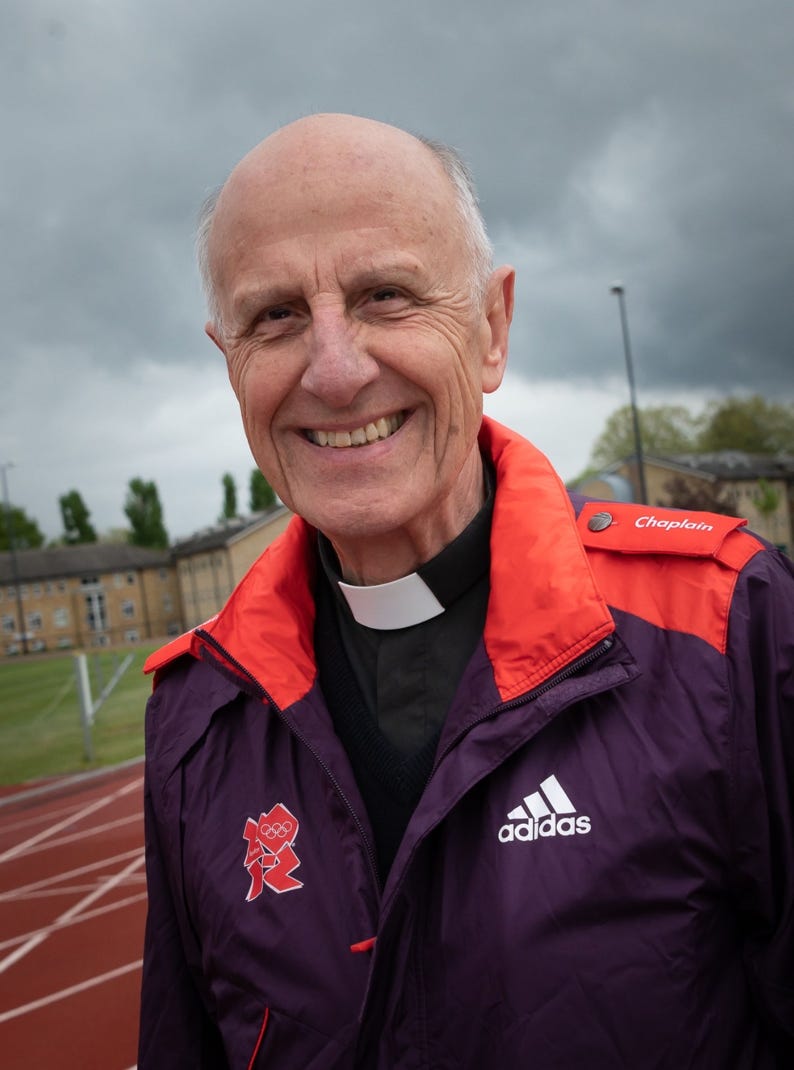
Prof. Msgr. Vladimir Felzmann aka Father Vlad
still working to help God make this World a better place

01/01/2026
Is well beyond even joy and certainly happiness.
In the Jerusalem Bible, we read that Jesus taught them: 'How happy are the poor in spirit; theirs is the kingdom of heaven. Happy the gentle: they shall have the earth for their heritage. Happy those who mourn: they shall be comforted. Happy those who hunger and thirst for what is right: they shall be satisfied.”
This, it seems to me, is not what Jesus taught.
Jesus probably spoke – and preached in Aramaic. So, in the Sermon of the mount when he pronounced what we call the Eight Beatitudes, he would have declared “Tuvayhon” whichmeans "blessed," "rich," or "content". It describes a profound sense of well-being that comes from an inner spiritual state. It carries a similar depth of meaning to the Greekmakarios, going beyond simple happiness. It signifies a spiritual joy and inner peace that is independent of one's external circumstances.
Happiness is a more fleeting, external emotion often triggered by specific events, while joy is a deeper, more lasting feeling rooted in internal contentment and well-being.Happiness can be described as an emotional state or a feeling resulting from a pleasurable experience, whereas joy is a more profound sense of bliss and satisfaction with life.
Cicero(106-43 bce, Roman statesman, lawyer, scholar, philosopher, orator, writer and Academic sceptic, who tried to uphold optimate principles during the political crises that led to the establishment of the Roman Empire) believed happiness comes from tranquillity of mind, a state of peace free from irrational emotions.He also stated that friendship doubles joy and divides grief, improving happiness and lessening misery.
Other of his quotes highlight the importance of self-reliance and having inner resources for a happy life.
"Friendship improves happiness, and abates misery, by doubling our joys, and dividing our grief."
"I do not understand what the man who is happy wants in order to be happier."
"Most happy is he who is entirely self-reliant, and who centres all his requirements in himself alone."
"Men – and women(I add) - of course, who have no resources in themselves for securing a good and happy life find every age burdensome. But those who look for all happiness from within can never think anything bad which Nature makes inevitable."
On the source of joy:"No man truly has joy unless he lives in love".
As Jesus Christ said, “If you keep my commandments, you will remain in my love, just as I have kept my Father's commandments and remain in his love. I have told you this so that my joy might be in you and your joy might be complete. This is my commandment: love one another as I love you. “ (John 15:10-12 )
St Thomas Aquinas(c.1225–1274) viewed blessedness, orbeatitudo, asthe ultimate and perfect end of human life, attainable only in the afterlife through the direct vision of God. He distinguished between perfect, eternal blessedness and the imperfect, temporal happiness that can be experienced in earthly life.
Aquinas argued that all human actions are directed toward some end or purpose. Because human beings have a natural desire for complete fulfilment, they seek a single final end that will satisfy all their desires, leaving nothing more to be sought. He considered and rejected earthly goods - such as wealth, power, and pleasure - as the ultimate end because they are all limited and incapable of providing the complete, lasting satisfaction that the soul desires.
According to Aquinas, this perfect fulfilment can only be found in God, who is goodness itself. The final, perfect blessedness of the rational creature consists in knowing and loving God perfectly.
The central component of Aquinas's view of blessedness is theBeatific Vision, which is the direct, unmediated intellectual apprehension of God's essence.
Aquinas recognized two levels of happiness, which he did not see as contradictory, but rather
In short, Aquinas's view integrates Aristotle's philosophical ethics of human flourishing with the Christian theological doctrine of salvation. He concludes that while a limited form of happiness is possible on earth, the perfect blessedness that truly fulfils all human desire can only be found in the supernatural, face-to-face vision of God in the next life.
Life has taught me that when I forget myself and live for others I am blessed as I journey on to eternity and the visible God.
Four quotes on blessedness:
Blessed are the hearts that can bend; they shall never be broken.” ―Albert Camus (1913-60; French philosopher, novelist, author, dramatist, journalist, world federalist, and political activist. He was the recipient of the 1957 Nobel Prize in Literature at the age of 44, the second-youngest recipient in history.)
“Live a good life. More smiling, less worrying. More compassion, less judgment. More blessed, less stressed. More love, less hate.” ―Roy Bennett (1957-2018; Zimbabwean politician and member of the British South Africa Police.)
“Faith in God will elevate you to next level blessings.” ―Germany Kent (born 1975; American journalist, author, actor, producer, and philanthropist.)
“A man who can laugh at himself is truly blessed, for he will never lack for amusement.”
―James Carlos Blake (1943-2025; American novelist as well as a writer of novellas, short stories, and essays.)
Prof. Msgr. Vladimir Felzmann aka Father Vlad
send Father Vlad a message
msgr.vladimir.felzmann@gmail.com
+44 (7810) 116 508
copyright Prof. Msgr. Vladimir Felzmann